


By the end of 2025, the 3D graphics, film production, and game development industries had finally established new standards. The transition of pipelines to Unreal Engine 5.5 , the widespread adoption of Nanite technologies, and the native 8K workflow made previous generations of hardware ineffective.
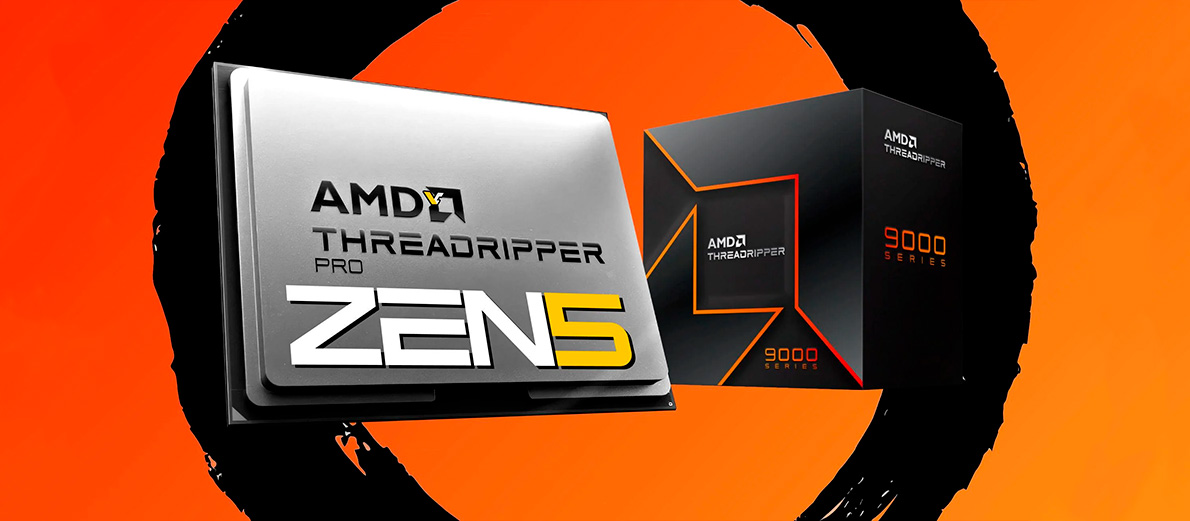
Even high-end gaming PCs (Enthusiast Consumer segment) can no longer handle virtual production workloads and heavy fluid/particle simulations. The AMD Ryzen Threadripper 9000 platform (Zen 5 / Shimada Peak architecture) paired with professional graphics based on the Blackwell architecture will become the foundation for professional builds in 2026 .
1. Processor and Ecosystem: Why Threadripper 9000?
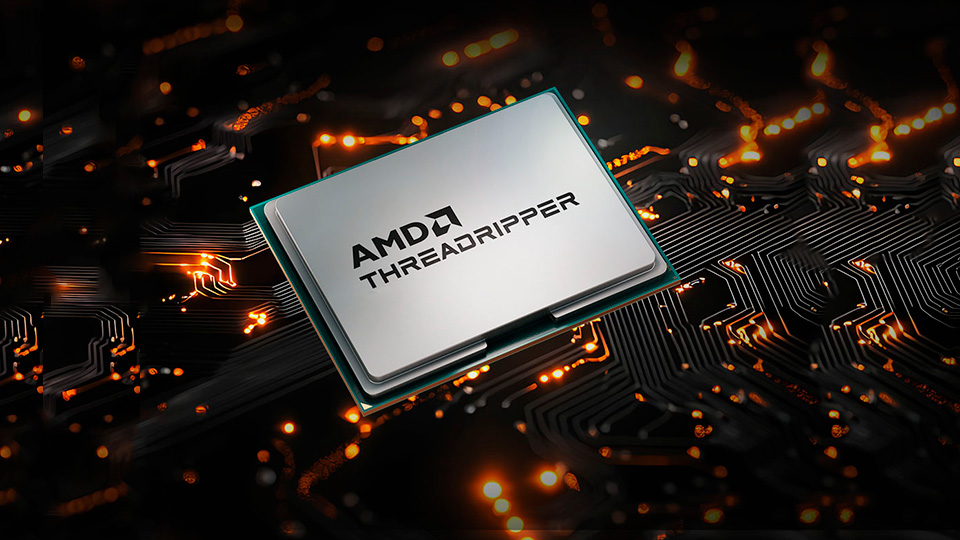
The choice of Threadripper 9000 on motherboards with the WRX90 chipset is due not only to the IPC (instructions per clock) increase in the Zen 5 architecture, but also to the I/O capabilities.
- PCIe 5.0 Lanes: The platform provides up to 128 PCIe Gen 5.0 lanes. This is a critical clarification: contrary to early rumors, native PCIe 6.0 support is not available in the Shimada Peak generation (it is expected only in Zen 6). However, the Gen 5.0 bandwidth (up to 128 GB/s for a x16 slot) is more than sufficient for current and future workloads.
- Scalability: This number of lanes allows you to connect NVMe Gen5 RAID arrays, 8K/12G-SDI capture cards, and 2-4 video card configurations without bifurcation, which is not possible on consumer platforms (Intel Core i9 or Ryzen 9).
2. RAM: Saving from render crashes
The main mistake beginners and enthusiasts make when building a 3D workstation is relying solely on the graphics card’s power. In real-world production environments (Houdini FLIP simulations or scenes with billions of polygons), video memory (VRAM) runs out very quickly.
When a graphics card buffer overflow (VRAM overrun) occurs, render engines (Redshift, Octane, V-Ray) switch to Out-of-Core rendering mode . Geometry and texture data are flushed to RAM.
- Bottleneck: On regular PCs with Dual Channel memory, the speed drops drastically, rendering slows down by 5-10 times.
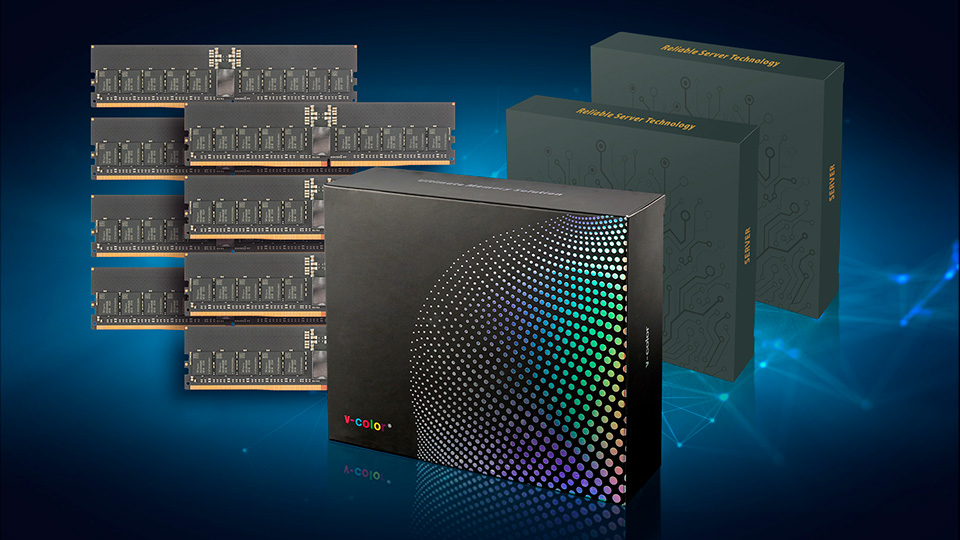
- The WRX90 solution uses 8-channel DDR5 RDIMM ECC (error-correcting code) memory. This memory subsystem’s bandwidth approaches the speeds of previous generations of video memory. Available in capacities ranging from 256 GB to 512 GB, the system continues to render heavy scenes with virtually no performance loss, even if they exceed the GPU’s capacity.
3. Video cards: RTX 5090 vs. RTX 6000 Ada/Blackwell
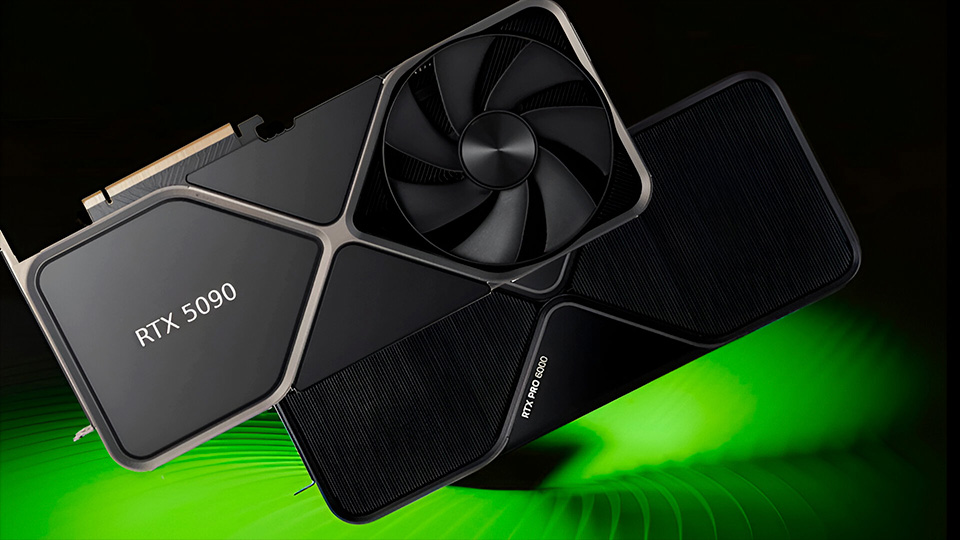
In 2025-2026, the choice will be between a flagship gaming device and professional solutions.
- NVIDIA GeForce RTX 5090: Receives 32 GB of GDDR7 memory (on a 512-bit bus). This is a powerful solution for GPU rendering, but 32 GB may still be a limitation for complex 8K scenes. Furthermore, game drivers are not always stable in specific software (e.g., CAD/CAE applications).
- NVIDIA RTX 6000 Ada / Blackwell Generation: These cards offer 48GB or 64GB of VRAM, memory teaming capability (via NVLink in certain configurations), and certified drivers.
- High-poly caching: For photogrammetry and Virtual Production, the combination of “Fast NVMe RAID + Wide PCIe 5.0 Bus + Huge DDR5 Buffer” is the only way to ensure smooth FPS in the viewport when the entire scene does not fit into video memory.
4. Cooling and Power: Hidden Threats
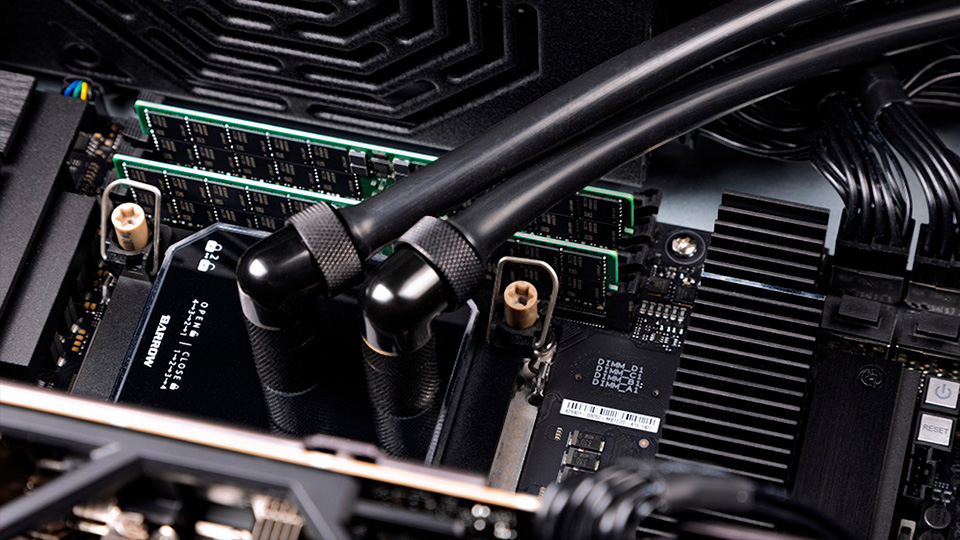
What is often kept quiet in reviews: the thermal design power (TDP) of the new components is extremely high.
- CPU: Threadripper 9000 can consume more than 350-400W under load.
- GPU: Using 8-channel DDR5 RDIMM ECC memory Top-end Blackwell cards have consumption peaks of up to 500-600 W.
Conventional air coolers and standard AIO systems are useless here. For stable operation (24/7 rendering), a custom liquid cooling loop (Custom Water Cooling) or specialized server solutions with high noise levels are required, necessitating professional case and ventilation selection.
Recommended configuration “Workstation 2026” (Base Line)
This build is aimed at professional studios and top-level freelancers:
- CPU: AMD Ryzen Threadripper 9960X (24 cores / 48 threads) or higher.
- RAM: 256GB DDR5-6400 RDIMM ECC (8 strips of 32GB to enable 8-channel mode).
- Storage (Cache): 4x 4TB NVMe Gen5 in RAID 0 (read speeds up to 40-50 GB/s).
- Storage (System/Project): 2x 4TB NVMe Gen5 (RAID 1 for reliability).
- GPU: 1x or 2x NVIDIA RTX 6000 Ada/Blackwell Generation (alternative: 2x RTX 5090, if software and budget allow).
- PSU: 1600W Titanium ATX 3.1.
FAQ: Frequently Asked Questions
- Why does the article mention PCIe 5.0? I heard PCIe 6.0 is already being released?
The PCIe 6.0 standard is already finalized, but hardware support from processors (including Zen 5) is currently limited to PCIe 5.0. Buying PCIe 6.0 SSDs for the current generation of Threadripper won’t provide a performance boost, as they will operate in Gen 5 compatibility mode. Don’t overpay for marketing. - Is it possible to save money and install regular DDR5 memory without ECC?
No. The Threadripper (sTR5) platform only supports registered memory (RDIMM). Regular UDIMM memory is physically incompatible and won’t provide the necessary stability at capacities of 256GB+. - Do I need Threadripper for Unreal Engine 5, or is the Ryzen 9 9950X sufficient?
For indie development and learning, the Ryzen 9 is sufficient. But for compiling shaders in large projects, working with high-density Nanite, and, most importantly, connecting multiple graphics cards and large amounts of memory, the PCIe lanes of a typical processor (only 24-28 lanes) are critically insufficient. Threadripper is needed for applications where downtime is more valuable than the computer itself. - Is the premium over the RTX 6000 worth it?
The RTX 5090 is a great card, but it takes up 3-4 expansion slots and has fans that exhaust hot air into the case (in most versions). Professional cards are more compact (2 slots), have an outward exhaust system, and twice the memory. If you work with 8K textures and complex scenes, the 32GB of the 5090 may not be enough, and you’ll run out of memory.

