


Full-fledged 4K gaming without compromise in 2026 requires a budget of at least 800,000. The transition to NVIDIA Blackwell (RTX 50 series) and AMD RDNA 4 architectures has made 3840×2160 the standard for enthusiasts, delivering native 60+ FPS in AAA titles with path tracing.
Brief conclusions
- Minimum entry threshold: Video cards at the level of RTX 5070 Ti or RX 8800 XT (from $799).
- Video memory standard: For 4K in 2026, a strictly minimum of 16 GB of GDDR7 VRAM is required.
- CPU bottleneck: At 4K, the load falls on the GPU, but for stable 1% Low FPS, chips with 3D V-Cache (for example, Ryzen 7 9800X3D) are required.
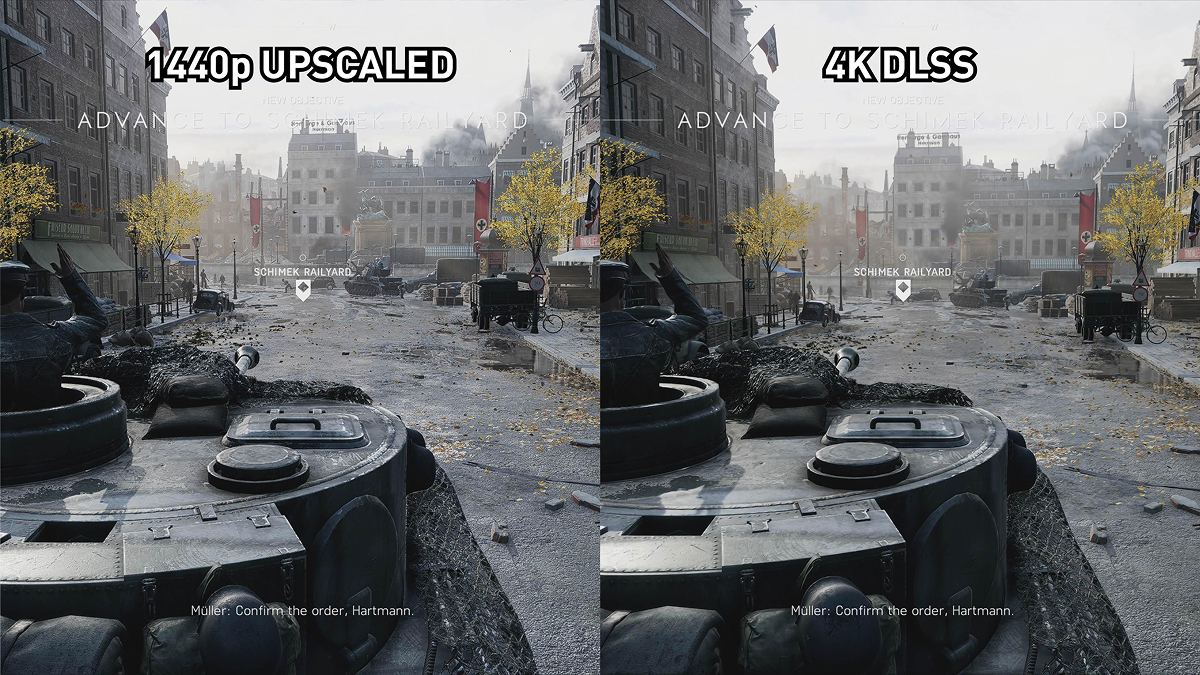
- Upscaling: DLSS 4.0 and FSR 4.0 with neural network frame generation increase performance by 120-150% without visible loss of quality.
How much will a 4K gaming PC cost in 2026?
Assembling a system case for 4K resolution will cost at least 350,000 rubles for the basic configuration and up to 800,000 rubles for the ultimate solution. The final price depends on the chosen video memory generation and the presence of a custom cooling system.
- Base Level (from 350,000): RTX 5070 Ti + Core Ultra 5 265K. Delivers 60-80 FPS on high settings with DLSS enabled in Quality mode.
- Optimal level (from 530,000): Based on the RTX 5080 and Ryzen 7 9800X3D. Delivers a stable 100+ FPS at ultra settings with ray tracing.
- Ultimate Tier (from 800,000): Flagship RTX 5090 with 32GB of GDDR7. Enables native 4K gaming at 144Hz without the use of upscalers.
Which Hardware to Choose: Comparison of 4K Graphics Cards
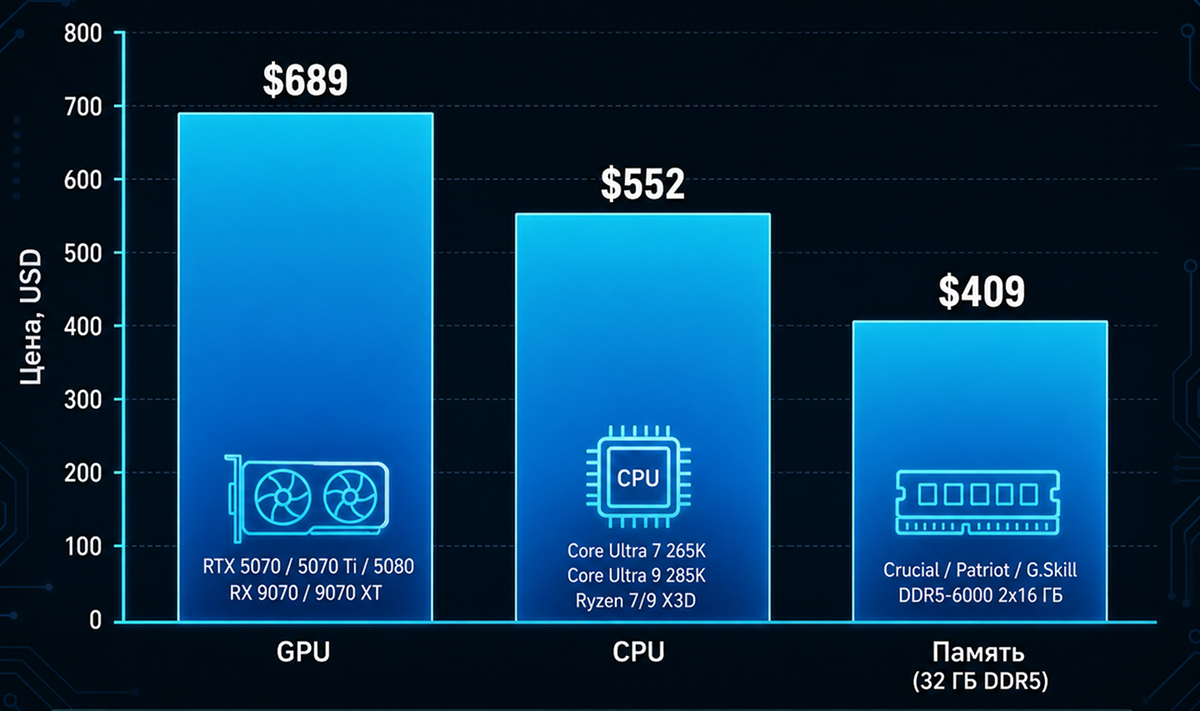
Comfortable 4K gaming requires a graphics card with at least 1000 GB/s of memory bandwidth and at least 80 TFLOPS of computing power. The NVIDIA RTX 5000 and AMD Radeon RX 8000 series are the market leaders in 2026.
Below is a comparison of current graphics accelerators based on tests in Cyberpunk 2077: Orion and GTA VI (Ultra settings, Path Tracing On).
Comparing 4K Gaming Graphics Cards
| Video card model | VRAM size and type | Average FPS (with DLSS/FSR) | Price |
|---|---|---|---|
| NVIDIA RTX 5090 | 32 GB GDDR7 | 145 FPS | $1,999 |
| NVIDIA RTX 5080 | 24 GB GDDR7 | 105 FPS | $1,199 |
| AMD RX 8900 XTX | 24 GB GDDR6X | 98 FPS | $1,099 |
| NVIDIA RTX 5070 Ti | 16 GB GDDR7 | 72 FPS | $799 |
For detailed Blackwell architecture benchmarks, please refer to NVIDIA’s official technical manual .
Processors and RAM: Requirements for 120 FPS
The AMD Ryzen 7 9800X3D is considered the optimal processor for 4K gaming thanks to its 104 MB of L3 cache, which minimizes frame drops during intensive scenes. On the Intel side, the Core Ultra 9 285K is the best choice, boasting frequencies of up to 6.0 GHz on its P-cores.
DDR5 RAM has completely replaced previous generations. To eliminate micro-freezing, a kit of two 16 GB modules (32 GB total) with a minimum frequency of 8000 MHz and CL34 timings is required. PCIe 5.0 SSDs with 12,000 MB/s read speeds have become a mandatory standard for DirectStorage technology.
Pros and Cons: Is 4K Worth the Upgrade?
The transition to 4K gaming offers unprecedented image clarity (140 PPI on a 32-inch monitor), but requires constant financial investment in upgrades. AI frame-generation algorithms smooth out the load, but don’t address the high cost of hardware.
Pros & Cons of Upgrading to 4K
- Perfect texture detail without the “soapy” effect on monitors from 27 to 42 inches.
- Unlocking the full potential of Unreal Engine 5.4 (Nanite and Lumen technologies).
- More screen real estate when using your PC for professional tasks.
- Extreme power consumption: High-end builds require ATX 3.1 standard power supplies with a power output of 1000W or more.
- High heat output: RTX 5090-class graphics cards take up 4 slots and require full-tower cases with sophisticated cooling systems.
- Dependence on upscalers: even flagships don’t always deliver 120 FPS at native resolution without DLSS 4 enabled.
Expert opinion
“In 2026, 4K gaming is no longer the preserve of lone enthusiasts, but the price of entry has risen. The biggest mistake users make today is buying an expensive GPU paired with slow memory. If you buy an RTX 5080 but keep the RAM at 6000 MHz, you’ll lose up to 15% performance, resulting in a 0.1% Low FPS. System balance is more important than raw GPU power.”
Conclusion
Modern 4K gaming requires careful budgeting and an understanding of PC architecture. Investing from $2,500 in a system with GDDR7 memory and a processor with 3D cache gives you a platform that will remain relevant for the next 4-5 years, allowing you to enjoy photorealistic graphics without frame rate drops.

